

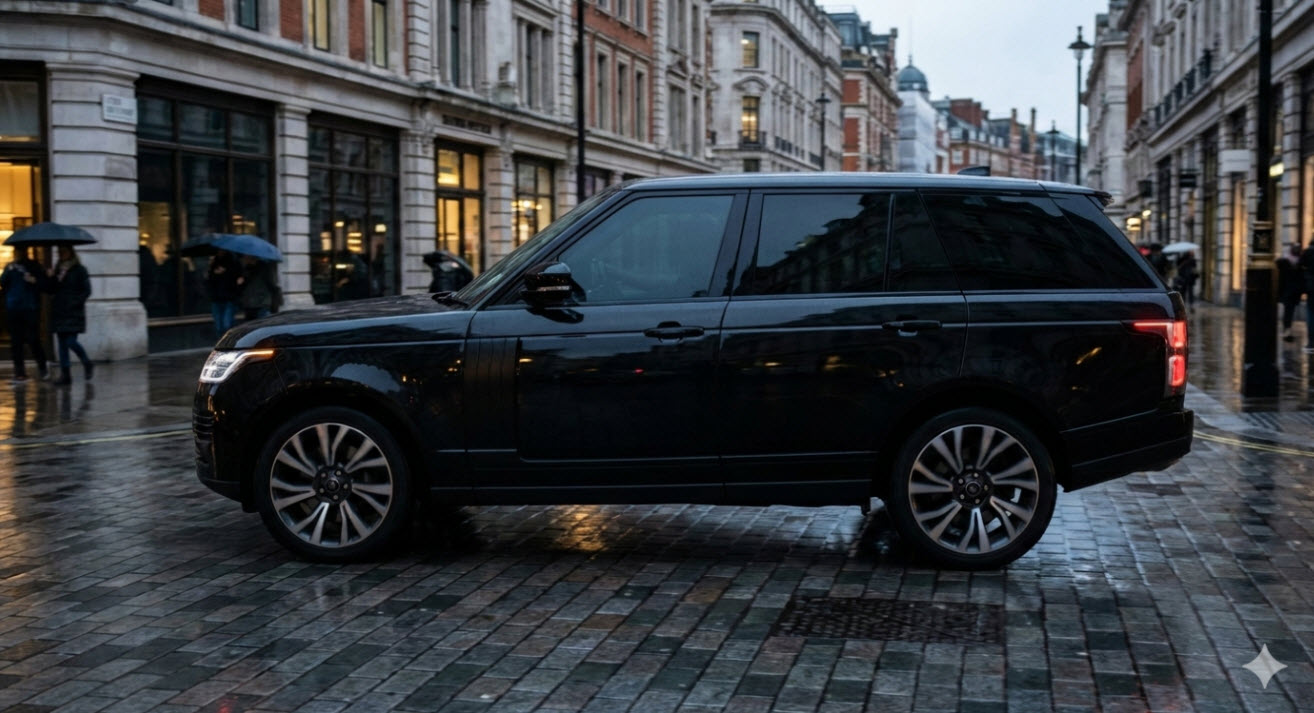
We’ve all stood on a rainy pavement in the West End, watching a tinted-window SUV glide past and wondered what happens once those doors shut. There’s a particular brand of British glamour that doesn’t quite match the flashy, neon-soaked excess of Los Angeles or the stiff, old-money reserve of Paris. It’s something else entirely—a mix of deep-rooted heritage and a very modern, almost aggressive quest for privacy. In the UK, living like a celebrity isn’t necessarily about being famous; it’s about accessing a version of the country that most people don’t even know exists. It’s about the side doors, the unlisted numbers, and the kind of rooms where the word “no” simply isn’t in the vocabulary.
Popular on LondonNet
To really get under the skin of this world, you have to understand that it’s not just about spending money. Plenty of people have money. The whole celebrity machine is built on a single foundation: “frictionless living.” It’s the removal of all those little daily annoyances that the rest of us just accept as part of life. It’s never having to wait for a table, never having to carry a bag, and never having to check the price of a vintage Bordeaux.
The Art of the Invisible Arrival
You can’t exactly claim to be living the high life if you’re sweating on a delayed commuter train or fighting for a black cab in a downpour. The true celebrity lifestyle begins with how you move. In London, this rarely means a bright purple supercar—that’s for the tourists. The real players opt for what we’ve come to call “quiet luxury.” You’ll want a chauffeur-driven vehicle where the only giveaway is the pristine condition of the black paintwork and the lack of a visible permit on the dashboard.
For those coming from further afield, the experience starts long before the wheels touch the tarmac. Let’s be honest: if you’re playing the game properly, you aren’t touching the major airport hubs. Private terminals like Farnborough or Biggin Hill are the preferred gateways. There’s a certain stillness in these places that you won’t find at a commercial airport. No queues, no frantic announcements about a lost bag, just a sharp-suited handler and a glass of something chilled. If you must use a major hub, the Windsor Suite at Heathrow is the only way to play it. You’re whisked from the plane to a private lounge while someone else handles the passport control and the luggage.
Once you’re in the city, the helicopter is the ultimate time-saver. Moving from the Battersea Heliport to a country estate in the Cotswolds takes about twenty minutes—roughly the time it takes most of us to find a spot in a supermarket car park. It’s this total removal of friction that defines the lifestyle. When time is the only thing you can’t buy more of, you spend a fortune making sure none of it is wasted. There’s a massive shift right now toward electric VTOLs (Vertical Take-Off and Landing) which are quieter and more “eco-conscious,” allowing celebrities to maintain their lifestyle without the noise complaints from the neighbours.
Suites That Cost More Than a House
Where you sleep is the ultimate tell. We aren’t talking about a nice hotel room with a decent view. We’re talking about residences. The Sterling Suite at The Langham is often cited as the pinnacle of this, frequently commanding a price tag around the £25,000-a-night mark. It’s less of a hotel room and more of a six-bedroom fortress with its own media room and a piano that’s seen more talent than most concert halls.
There’s also the Peninsula London, where the suites overlooking Hyde Park Corner have redefined what it means to be “well-situated.” If you’re staying there, you aren’t just a guest; you’re part of a meticulously choreographed dance of service. Your butler probably has your morning macchiato at the perfect temperature before you’ve even opened your eyes. The OWO (The Old War Office) has also become a massive draw, offering a sense of historical weight that newer buildings just can’t replicate. Sleeping in a room where Churchill once made world-altering decisions adds a layer of “main character energy” that money usually can’t buy.
But maybe the traditional grand hotels feel a bit too much like a museum. In that case, the trend is shifting toward “ultra-villas” and high-end rentals in Mayfair or Belgravia. These are homes where the staff is invisible but the service is omnipresent. You get the privacy of a townhouse with the amenities of a five-star resort. It’s the kind of place where you can host a full-blown dinner party without ever setting foot in the kitchen.
The New Golden Age of the Table
If you want to see where the real deals are being cut, you head to the newly reopened Simpson’s in the Strand. After years of being dark, it has been brought back to life, and the buzz is palpable. It’s a return to that classic British grandiosity—silver carving trolleys, roasts that take all day to prepare, and a sense of history that you just can’t manufacture. It’s the kind of place where the walls have heard a century of secrets, and they aren’t telling.
However, the celebrity appetite is fickle. While Simpson’s offers that old-school weight, the newer spots like Brasserie Angelica in Fitzrovia provide a lighter, more rhythmic European vibe. It’s all-day dining, but done with a level of precision that makes a simple breakfast feel like an event. Then there’s the anticipated opening of Osteria Vibrato in Soho, which is already the most talked-about reservation in town. It’s being described as a “love letter to Italy,” and in the world of high-end dining, a love letter usually comes with a very long waiting list.
The trick to eating like a star isn’t just about getting a table; it’s about which table. The “Chef’s Table” remains the gold standard. Being tucked away in the kitchen of a Michelin-starred powerhouse, watching the chaos of a service while being hand-fed the finest ingredients on the planet, is an ego trip like no other. It’s loud, it’s hot, and it’s utterly exclusive. You aren’t just eating a meal; you’re being given a backstage pass to a performance.
Membership Has Its Privileges (and Its Walls)
The public dining room is all well and good, but the real heavy hitters spend their time behind closed doors. The private members’ club is a UK institution that shows no sign of fading. If anything, it’s getting more specialized. Christabel’s in Fitzrovia is the current “it” spot for the creative crowd—think musicians, artists, and people who look like they’ve never had a boring day in their lives. It’s a 1970s-inspired fever dream with a license that lets the party go until dawn.
For those who need to balance their hedonism with a bit of productivity, Maslow’s is expanding its reach into Kensington. It’s part of a broader shift where the “club” is no longer just a place to drink gin and complain about the government; it’s a wellness hub, a workspace, and a social sanctuary all rolled into one.
But how do you get in? It’s not just about the money, though that’s the baseline. It’s about who you know and, more importantly, who knows you. The application process for some of these places is more gruelling than a mortgage interview. They’re looking for a “vibe,” a contribution to the community. If you manage to slip through the gates, you’re rewarded with a space where you can actually take your coat off and breathe. In a city where everyone has a camera in their pocket, these clubs are one of the few places where you won’t end up on someone’s social media feed against your will.
The Personal Concierge: The Ghost in the Machine
What people often miss is that a celebrity doesn’t really ‘live’ their own life, at least not in the way the rest of us do. They have a concierge. This isn’t the guy behind the desk at a hotel; this is a dedicated lifestyle manager. These people are the ultimate fixers. Need a sold-out ticket to the Manchester Brit Awards? They have a guy. Want a specific vintage of champagne delivered to a yacht in the middle of the night? They have a guy for that, too.
Living like a celebrity means outsourcing your brain. You don’t worry about the “how.” You just state the “what.” This kind of hand-holding doesn’t come cheap—membership fees can easily clear tens of thousands a year—but it’s the only way to move through a world that’s increasingly locked tight for everyone else. These fixers are the ones who know that the “fully booked” restaurant actually has a table held back for “friends of the house.”
The Social Calendar as a Full-Time Job
Living the high life requires a certain level of stamina. The UK social season is a relentless march of “must-attend” events. Right now, all eyes are on the BAFTAs. It’s the British answer to the Oscars, and the red carpet at the Royal Festival Hall is currently the most scrutinized patch of velvet in the country. Following closely on its heels are the Brit Awards, which have moved to Manchester recently, proving that the north can do high-octane glamour just as well as the capital.
As we move toward the warmer months, the calendar becomes even more packed. There’s the Chelsea Flower Show, which is much more than just looking at flowers; it’s a high-stakes networking event for the horticultural and social elite. Then comes Royal Ascot, where the dress code is so strict it makes a military uniform look relaxed. If your top hat isn’t at the correct angle, you might as well be invisible.
Later in the year, you have Wimbledon and Cowes Week. These aren’t just sporting events; they’re benchmarks of the year. To enjoy them like a celebrity, you need access to the hospitality suites—the places where the champagne is free-flowing and the view of the action is secondary to the quality of the canapés. It’s a peculiar way to live, moving from one cordoned-off area to the next, but it provides a structure to a life that might otherwise feel a bit aimless.
The “Quiet” in Quiet Luxury
Everyone is talking about “quiet luxury” lately, and you can really see it in how the elite are spending their downtime. The era of the loud, flashy yacht might be waning in favour of “regenerative travel.” This means heading to the Scottish Highlands for a week of “intentional disconnection”—which is a fancy way of saying staying in a very expensive lodge with no Wi-Fi.
The focus has shifted to wellness that actually works. We’re seeing a rise in medical-wellness retreats where you aren’t just getting a massage; you’re getting a full biological audit. Places like the Cottonmill Spa at Sopwell House or the high-tech clinics on Harley Street are the new cathedrals of the celebrity world. If you look like you’ve just stepped off a plane from the Maldives in the dead of a London winter, people just assume you’ve got a team of experts keeping you in peak condition.
This extends to fashion, too. The days of huge logos are mostly behind us. The true mark of status is a coat that looks simple but was handmade on Savile Row and cost more than a mid-range hatchback. It’s about the “if you know, you know” factor. It’s a way of signalling to others in your tax bracket without alerting the rest of the world. It’s a subtle, almost whispered form of wealth. You won’t find these people shopping on the main floor of Harrods; they are in the “Penthouse” or “The Residence,” where the clothes are brought to them and the doors are locked.
The Countryside Flex
While London is the stage, the countryside is the sanctuary. The “Chipping Norton set” might have been a punchline once, but the desire for a sprawling estate in the Cotswolds remains the ultimate British status symbol. However, it’s not enough to just own a house. You need to own a house that feels like it’s been in the family for generations, even if you only bought it last year.
It usually comes down to hiring ‘heritage consultants’ who can help you source the right antique furniture, the right species of oak for your library, and even the right breed of dog to roam your grounds. It’s about creating a narrative of permanence. In the UK, new money is often looked at with a bit of a squint. To live like a celebrity, you have to pretend you’ve always lived this way.
The trend for 2026 is the “Sovereign Estate,” where the home is entirely self-sufficient. We’re talking private water filtration, solar farms hidden behind ancient stone walls, and organic gardens that provide 90% of the household’s food. It’s a mix of feudalism and futurism.
The High Cost of the Dream
Let’s be honest for a second. Maintaining this level of existence is exhausting and incredibly expensive. You could slog away for forty years and never even smell the lobby of a Mayfair penthouse, or you could strike it lucky with the Irish lottery and be picking out a bespoke Bentley by Tuesday afternoon. But even then, the money is just the entry fee. The real work is in the maintenance.
The sheer logistics of managing a celebrity-style life—the staff, the bookings, the travel, the constant need to be “on”—is a full-time commitment. You aren’t just living; you’re managing a small corporation where the product is your own public image and personal comfort. It’s why so many people at this level have “burnout” despite never having to do their own laundry.
There’s also the psychological toll of being permanently separated from the rest of society. When you only interact with people who are paid to be nice to you, or who want something from you, the world can start to feel a bit thin. The privacy you crave can quickly turn into isolation. You’re in the VIP lounge, sure, but you’re also in a gilded cage. Is the view better? Definitely. Is the air a bit stale? Sometimes.
The Reality Behind the Velvet Rope
We tend to look at the glamour and see only the surface—the shimmering dresses, the effortless travel, the pristine hotel suites. But there’s a reason celebrities often seem so stressed. Every movement is planned, every outing is a potential headline, and the pressure to maintain the image is unrelenting. You don’t just “go out” for a coffee; you “appear” for a coffee.
Is it worth it? For a taste of it, certainly. There is nothing quite like the feeling of walking into a room and being treated as the most important person there. There’s a thrill in the exclusivity, a genuine joy in the craftsmanship of a Michelin-starred meal or a bespoke suit. It’s a world of beauty and precision. It’s a reminder of what human beings can achieve when they have unlimited resources and a team of experts at their disposal.
Wrapping Up
In the end, though, the celebrity lifestyle is a complex interplay of glamour and hardship that most of us only ever see from one side. It’s a performance that requires a huge amount of resources to keep the curtain up. Whether you’re looking to dive in headfirst or just want to dip a toe in with a fancy dinner or a night in a grand suite, it’s worth remembering that the velvet rope is there for a reason—it keeps the mystery alive.
So, next time you see that black SUV glide past in the rain, don’t feel too bad about being on the pavement. You might have wet shoes, but at least you don’t have to worry about whether your top hat is at the correct angle for Ascot or if your bio-markers are perfectly aligned for your morning yoga session. Sometimes, the greatest luxury of all is just being able to walk down the street without a single person caring who you are.
Currently trending fun in London