
Comedy
Jackass: Best And Last (18)
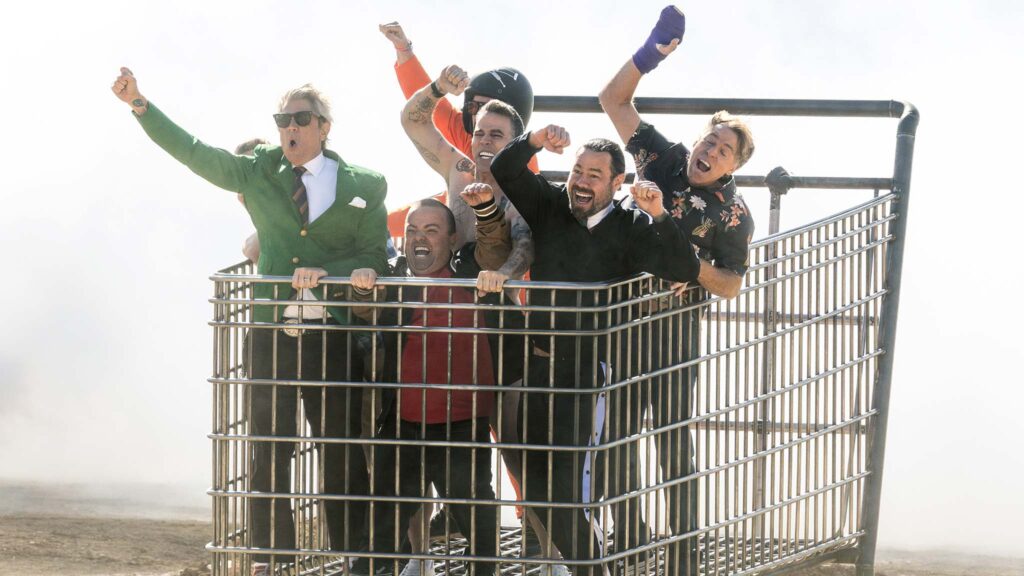

Review: Johnny Knoxville is strapped into a homemade electric chair towards the end of Jackass: Best And Last when fellow prankster Chris Pontius asks him bluntly if this fifth instalment of manchild’s play really is the end of knuckleheaded showmanship. With an audible voice crack, Knoxville confirms this madcap compilation of favourite pratfalls and new eye-watering escapades is the final time we will have to endure grown men weathering body blows and electric shocks to their exposed nether portions.
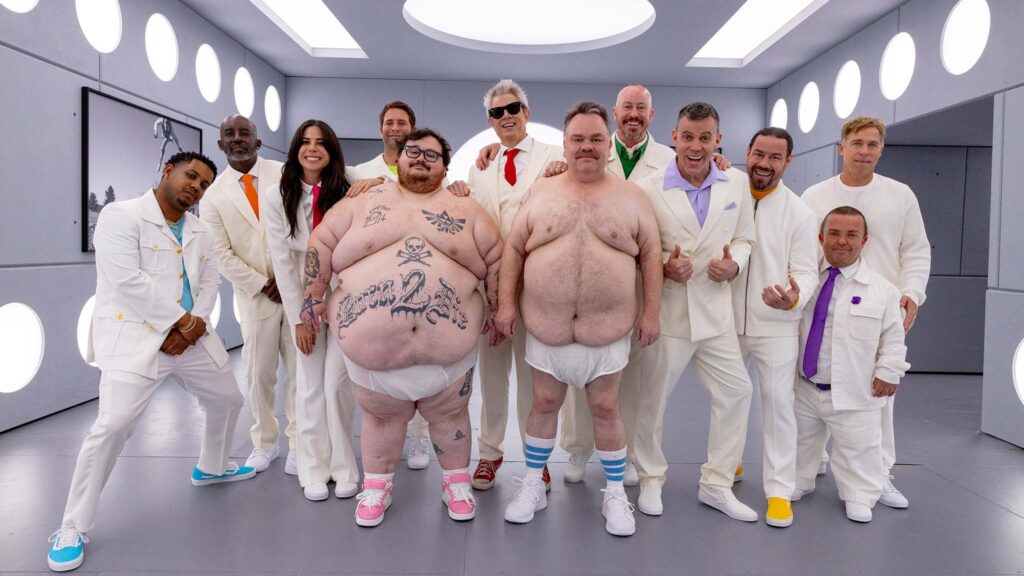
By no means the funniest chapter of tomfoolery – most recent films have fallen victim to the law of diminishing returns – the foul-mouthed farewell boasts enough stand-out moments and displays of genuine emotion to warrant a return of familiar faces and buttocks. Most of the cast of Jackass Forever are back including Steve-O, Pontius, Jason “Wee Man” Acuna, Dave England, Preston Lacy, Jasper Dolphin, Zach Holmes, “Danger Ehren” McGhehey, Sean “Poopies” McInerney, Compston “Dark Shark” Wilson and Rachel Wolfson. Disappointingly, Wolfson – the sole antidote to all that testosterone sloshing about on screen – is a passive observer almost the entire film.
Jackass: Best And Last is prefaced by the usual disclaimer that all stunts depicted on screen have been “performed by professionals”. Series regular Jeff Tremaine returns to the director’s chair and opens with unaired footage of the first stunt imagined for the MTV series, captured in January 1998. Knoxville shoots himself in the chest with a loaded gun while wearing a bulletproof vest stuffed with adult magazines. An on-screen caption states the obvious: this is “extra stupid” and poses a very real chance of death.
More than once, Knoxville defies common sense and flirts with the Grim Reaper for the sake of a supposed laugh. His horrific close encounter with a charging bull is replayed in slow motion. Footage of him wheeling through the air like a limp rag doll and clattering to the ground is no chuckling matter.
New bouts of consensual self-harm including a hellish escape room and a nauseating rectal exam performed by a robot with a mechanical finger smeared with crunchy peanut butter are lacklustre compared with japes from the archive. Indeed, belly laughs are reserved for old material, such as Knoxville hanging out in a strip bar, in every sense, disguised as disgraceful octogenarian Irving Zisman.
In behind-the-scenes footage from this concluding foray, Knoxville admits to feeling sad that the end is nigh for his brotherhood of buffoons. Tremaine asks, off-screen, if castmate Pontius feels the same. “No, I’m not in touch with my emotions,” he cheerfully replies. A quarter of a century of bone-crunching one-upmanship will have that numbing effect.
Find Jackass: Best And Last in the cinemas
Thriller
A Private Life (15)
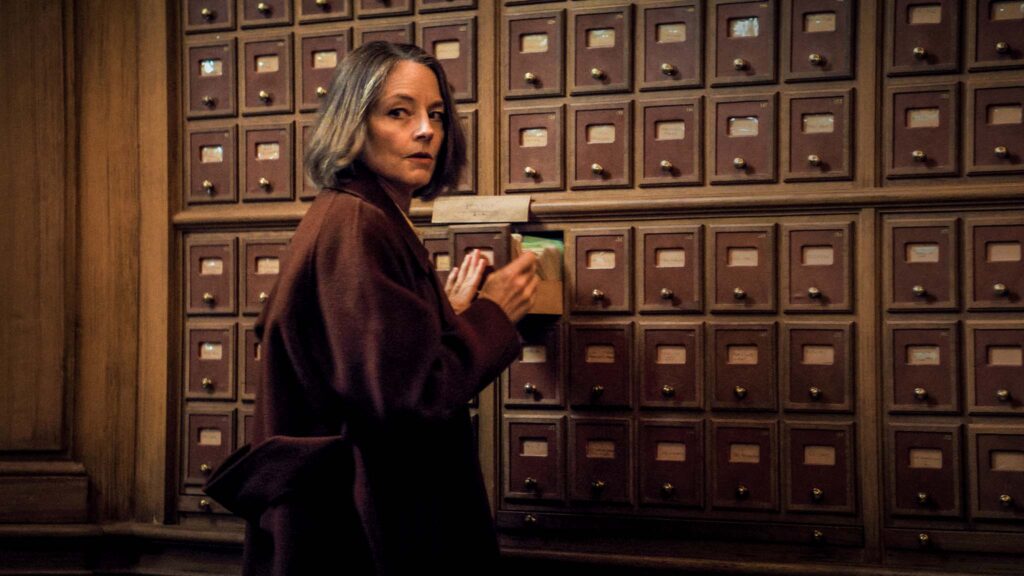
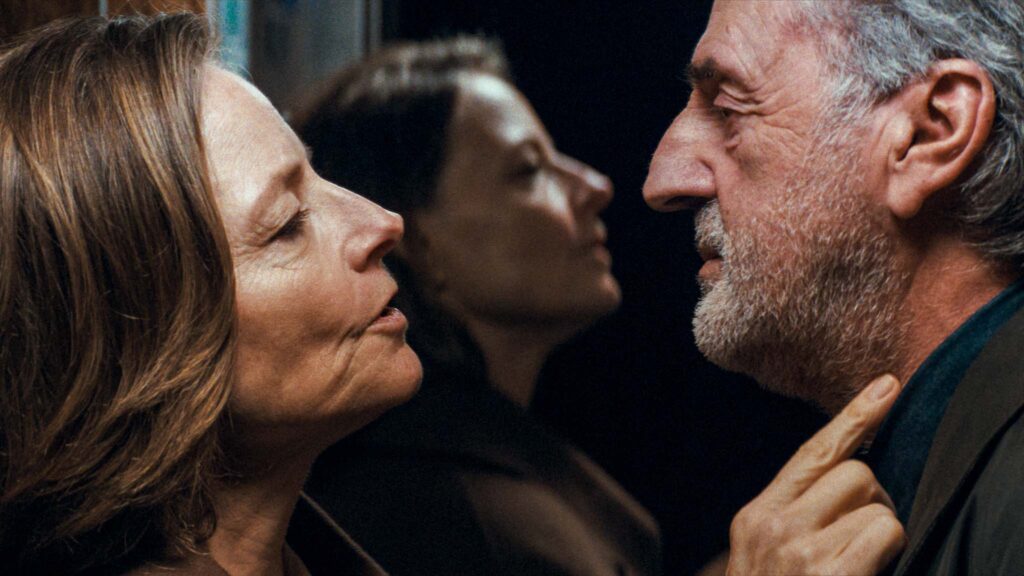
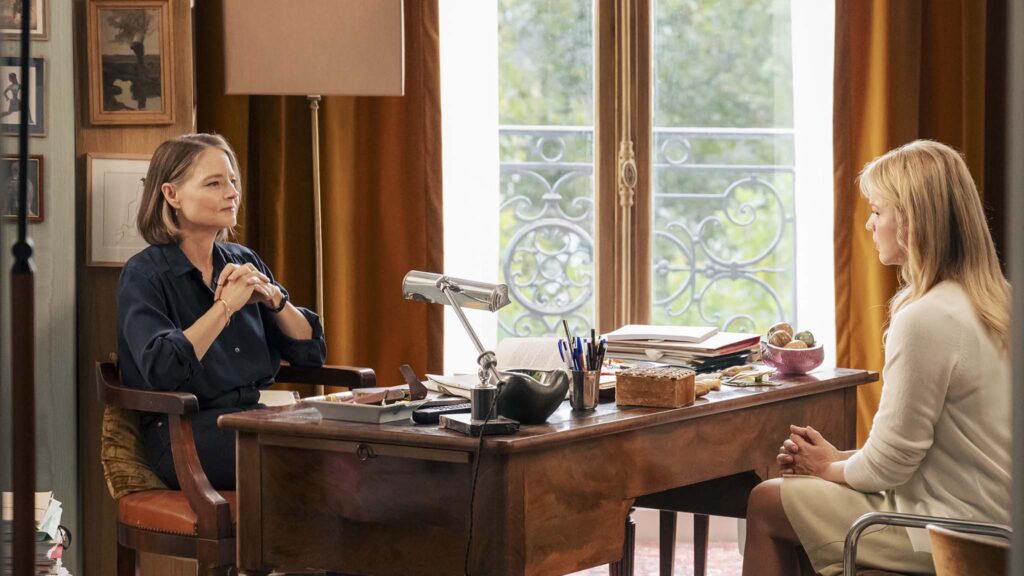
Review: An American in Paris waltzes through an increasingly convoluted murder mystery in director Rebecca Zlotowski’s French-language thriller. Co-written by the filmmaker, Anne Berest and Gaelle Mace, A Private Life invites Jodie Foster to jive between highly fluent French and English as a jittery, cynical heroine who is convinced that one of her patients was murdered by someone close to them. Foster plays American psychiatrist Dr Lilian Steiner, who practises in Paris, where she navigates her patients’ needs and maintains haphazard relationships with her son Julien (Vincent Lacoste), who has a newborn, and ophthalmologist ex-husband Gabriel (Daniel Auteuil).
Out of the blue, Lilian receives a telephone call from Valerie Cohen-Solal (Luana Bajrami), daughter of her patient Paula (Virginie Efira), who has missed her last three sessions. Valerie reveals her mother is dead and invites Lilian to the wake. At the reception, Paula’s conductor husband, Simon (Mathieu Amalric), publicly rages against the shrink and she flees.
It transpires that Paula took her own life with pills prescribed by Lilian and Simon holds the psychiatrist responsible for his loss. Curiously, the deceased left behind a cryptic message, scribbled on the prescription. Based on confidential interactions with Paula, Lilian refuses to believe her patient was suicidal and she leaps to the conclusion that Paula must have been murdered. “I know things about her I shouldn’t know,” Lilian blurts. Nagging suspicion intensifies when someone breaks into Lilian’s apartment and ransacks her library of Minidisc patient recordings. The most recent session with Paula goes missing. Despite her professional misgivings, Lilian approaches a hypnotist (Sophie Guillemin) to unlock her memories of Paula in case a vital clue is filed deep within her subconscious.
A Private Life is a slow-burning whodunnit elevated by Foster’s casting as a tightly wound workaholic, who vows to prove she didn’t overlook the warning signs that a patient was planning to commit suicide. The two-time Oscar winner pinballs between supposition and suspicion and her nuanced performance repeatedly flatters the film. Scriptwriters have a sharp ear for poetic dialogue. When Paula reclines on Lilian’s couch in flashback, she reflects on conflicted emotions about her husband. “It’s as if he always has a knife in his voice. And a gun in his eyes,” confides the patient. The casting of Amalric, a former Bond villain, marks him as a usual prime suspect.
Foster shares simmering screen rapport with Auteuil. The frisson of familiarity between the two actors is palpable, climaxing in a heated embrace fuelled by free-flowing wine and bonhomie. As Lilian and Gabriel’s relationship heats up, Zlotowski’s picture noticeably cools and the grand denouement feels underwhelming after 103 minutes on Lilian’s couch.
Find A Private Life in the cinemas
Action
Supergirl (12A)
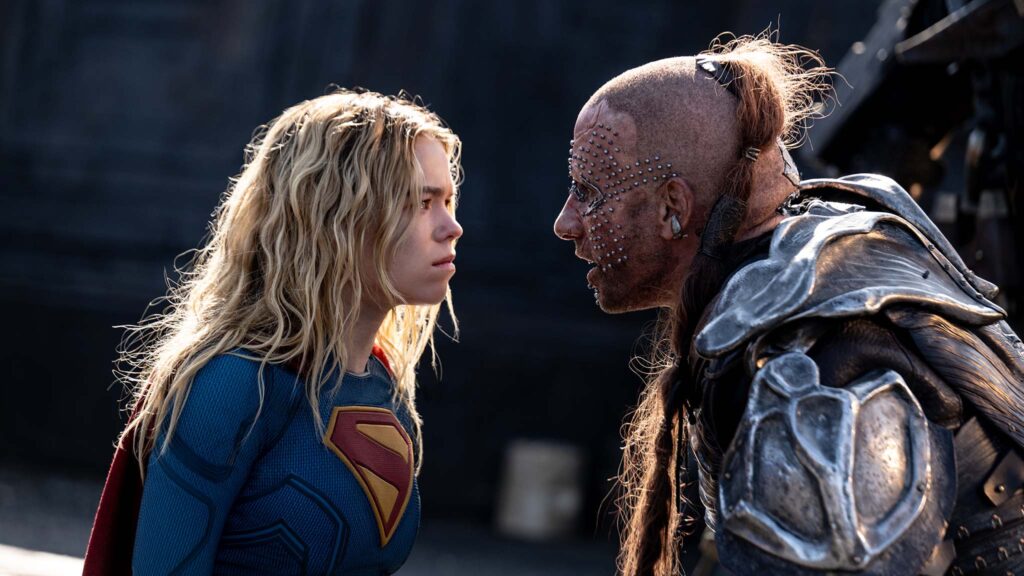
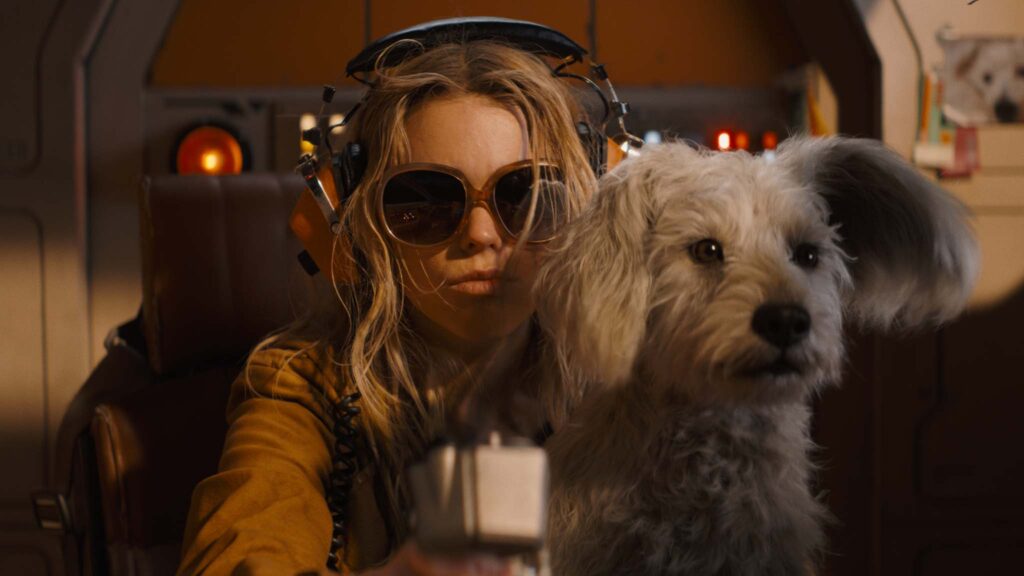
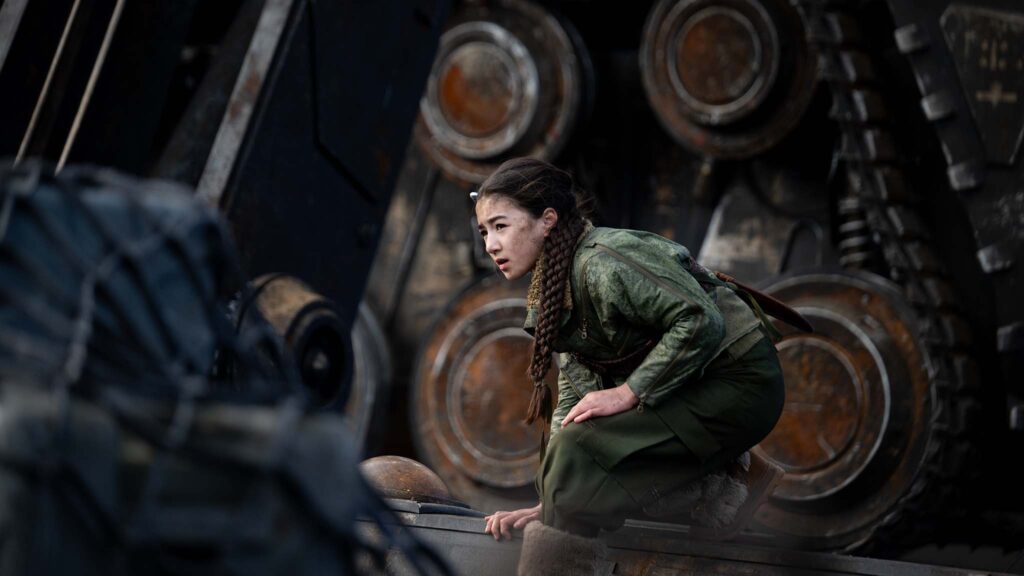
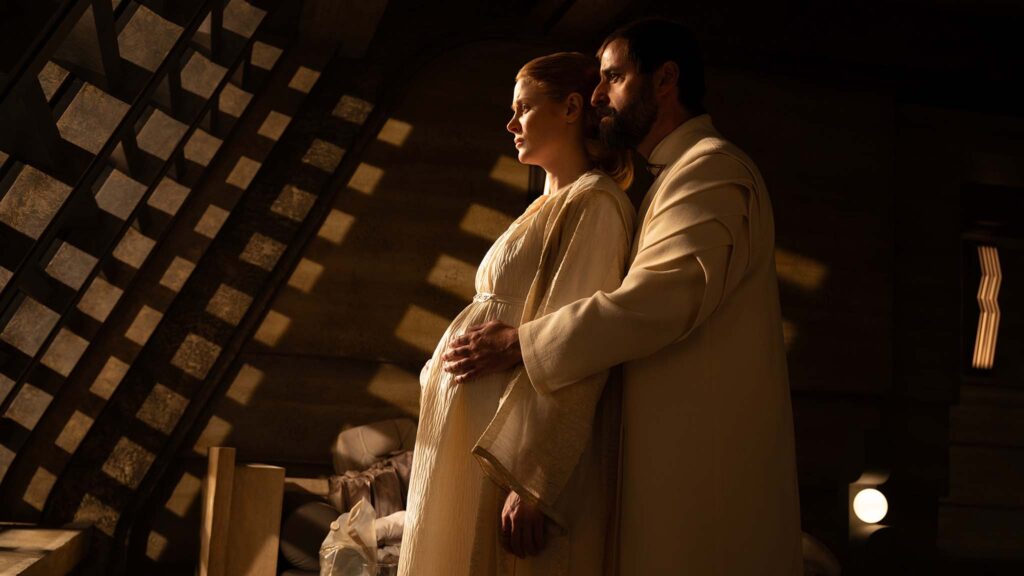
Review: Is it a bird? Is it a plane? No, it’s a party-loving, hungover visiting superhero from the extinct planet Krypton in search of some meaning to her life. Expanding the glossy DC Comics universe established by James Gunn’s 2025 version of Superman, director Craig Gillespie’s freewheeling origin story is a very different beast to David Corenswet’s introduction as the Man of Steel. “He sees the good in everyone, I see the truth,” explains cousin Kara Zor-El (Milly Alcock) aka Supergirl, providing clear warning of a cynical tang to Ana Nogueira’s script.
Kara (Alcock) is spared a protracted death by Kryptonite poisoning on the remains of her home planet like her parents (David Krumholtz, Emily Beecham) by travelling to Earth to seek refuge with her cousin, Clark (Corenswet) aka Superman. Haunted by her loss, Kara grows distant from Clark and celebrates her 23rd birthday on a distant planet with only her trusty dog Krypto for company. The vomit-spattered celebrations are interrupted by vengeance-seeking orphan Ruthye Knoll (Eve Ridley), whose parents Elias (Ferdinand Kingsley) and Delilah (Emily Piggford) and older brother Emond (Bruce Lennox) were slain by sadistic space pirate Krem of the Yellow Hills (Matthias Schoenaerts).
Ruthye seeks a brave warrior to kill Krem in exchange for her father’s sword. Kara initially rejects Ruthye’s advances but when Krem poisons Krypto and the pooch is given just three moonrises to live, the Kryptonian refugee vows to procure the antidote from Krem and pulverise a few gnarly space pirates. Cigar-puffing bounty hunter Lobo (Jason Momoa) gatecrashes the trip.
By turns irreverent, sombre and intentionally overblown, Supergirl pinballs between slickly executed set pieces, using Kara’s journey of self-discovery as a loose framework to explore righteous anger, redemption, female empowerment and child trafficking (Krem and his fellow Brigands kidnap young girls into a harem that propagates their all-male species). Alcock is compelling throughout and she traverses a complex emotional arc as a reluctant saviour, arguing at one point with teary eyes that her existence is insignificant and she would rather die alongside her parents than be spared for an exiled life of solitude.
As Kara, she trades freely in snarky humour and the bond with Krypto has strong echoes of John Wick. Digital effects to realise the otherworldly canine occasionally let the film down – more than once, there is a visible disconnect between flesh and blood protagonists and the airborne pooch. Ridley’s avenging angel is underwritten by comparison and Schoenaerts’ chief antagonist appears sporadically to kill supporting characters as shorthand for his evil.
In an early exchange between Kara and Ruthye, the orphan asks why Kara is Supergirl rather than Superwoman if she is a mere 10 years younger than her cousin, who warrants the title of Superman. Screenwriter Nogueira doesn’t have a clear answer. Perhaps superintelligent android Brainiac, who will challenge Superman in Man Of Tomorrow next summer, can compute a pithy response.
Find Supergirl in the cinemas