

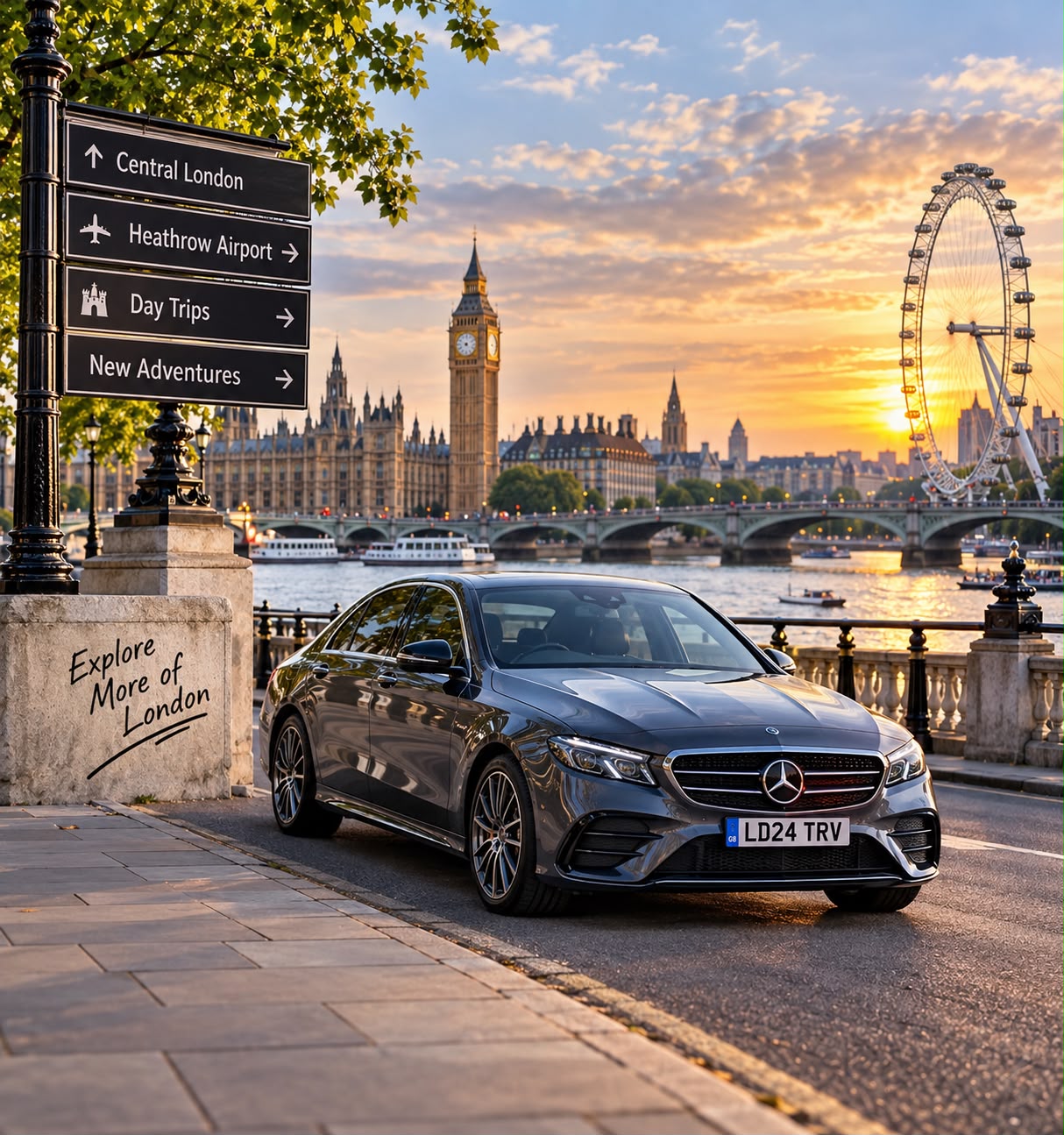
London has an extensive public transport network, including the Underground, buses, trains, cycling routes and taxis. For many journeys within the capital, these options can be more convenient than driving. However, there are situations where having access to a car can make travelling considerably easier.
Popular on LondonNet
Whether you are visiting London for a few days, travelling with family, attending meetings in different parts of the city or using London as a base for exploring other parts of the UK, car hire in London can provide additional flexibility.
Hiring a car is not necessarily suitable for every London trip. Central areas can be congested, parking may be difficult to find and public transport is often the simpler option for short journeys. However, a vehicle can be useful when travelling with luggage, visiting several locations, travelling with children or planning trips outside the capital.
The most suitable approach depends on your itinerary, the type of vehicle you need and how much driving you expect to do.
Why consider driving for London sightseeing?
One of the main reasons people hire a car is flexibility. Having your own vehicle means you do not have to organise every journey around train timetables, bus routes or changes between different forms of public transport.
London offers a wide range of attractions, from museums, galleries and historic buildings to markets, parks, theatres and restaurants. While public transport provides good access to many of these places, travelling beyond the centre can require additional planning.
A car can be particularly useful for combining several destinations in a single day or travelling to areas where public transport connections are less convenient. It can also make it easier to continue travelling outside London, where towns, villages, coastal areas and countryside destinations offer different experiences.
However, the benefits of hiring a car should be considered alongside the practicalities of driving and parking in the capital.
Car rental vs other London transport options
There is no single answer as to whether hiring a car is worthwhile. The decision largely depends on your plans and how you intend to spend your time in London.
For a short break focused mainly on central London attractions, public transport may be more practical. Many of the city’s most popular destinations are accessible by London Underground, bus or train, meaning a rental car may spend much of the day parked.
A longer visit involving several trips outside central London can make a car more useful. If your itinerary includes destinations that are difficult to reach directly by public transport, driving can reduce the number of changes required.
Families may also find a car convenient. Travelling with children can involve pushchairs, luggage, food and other items, and having storage space available can make longer journeys easier.
Groups of friends may similarly prefer travelling together rather than arranging separate public transport tickets for every journey.
Business travellers have different considerations. If meetings are scheduled across several locations, particularly in areas outside central London, a car can provide greater control over the day’s timetable.
For residents, short-term car hire can also be useful when a personal vehicle is not normally required. It can provide transport for a weekend trip, moving equipment or visiting destinations where public transport connections are limited.
Combining public transport with car hire
There are numerous car hire locations across London, so the most convenient collection point will depend on your travel arrangements.
For international visitors, collecting a vehicle at an airport can be convenient, particularly if the first destination is outside central London. Picking up a car after landing can allow you to continue your journey without arranging separate transport.
However, collecting a car immediately after arriving is not always the most practical option. If you plan to spend several days sightseeing in central London, you may find it easier to use public transport initially and hire a car only when you are ready to leave the city.
City branches and locations near major railway stations can provide alternatives to airport collection. This can also reduce the amount of time spent driving through busy central areas before the vehicle is actually needed.
When choosing a collection point, consider where you are staying, where you will travel next and how much driving you expect to do during the first part of your trip.
Tips for driving in London
Driving in London can be different from driving in smaller towns or rural areas. Traffic levels, road layouts and parking restrictions all require additional attention.
Drivers from overseas should remember that vehicles in the UK travel on the left-hand side of the road. Extra care may be necessary at junctions, roundabouts and when turning, particularly if you are unfamiliar with left-side driving.
Traffic can become especially heavy during weekday commuting periods. A journey that appears short on a map can take considerably longer during busy periods, so allowing additional travel time is sensible.
Navigation technology can help drivers plan routes and respond to changing traffic conditions. Live traffic information can identify delays and suggest alternative routes.
Nevertheless, drivers should continue to pay attention to road signs and local instructions rather than relying entirely on navigation software. Temporary road closures, diversions and restrictions may not always be reflected immediately.
It is also sensible to check current information about London’s traffic-management schemes, charges and environmental requirements before travelling. Rules can change, and requirements may vary depending on the vehicle being driven.
Tips for parking in London
Parking is one of the most important issues to consider when driving in London.
Central areas can have limited parking, while available spaces may involve charges or restrictions. Some streets have specific rules governing when and where vehicles can be parked, so checking the signs carefully is essential.
Planning parking before arriving at a destination can save time and reduce unnecessary stress. If you are visiting a popular attraction, shopping area or busy part of the city, investigate nearby parking facilities before setting off.
Drivers should always check local signs and restrictions before leaving a vehicle. Rules can vary from one street to another, and some restrictions apply only during particular hours.
Another option for certain journeys is park and ride, for example by parking at London train stations. Rather than driving into the busiest areas of central London, you c an leave the car outside the most congested parts and continue by public transport.
This approach can provide some of the convenience of having a car without requiring you to drive through the busiest sections of the capital.
Extra tips for London transport by car
Good preparation can make driving in London considerably easier.
Start by deciding exactly when you need a car. If your itinerary consists mainly of central London sightseeing, there may be little benefit in hiring a vehicle for the entire trip. You could instead use public transport for the first few days and hire a car when you are ready to travel elsewhere.
Choose the vehicle according to your practical requirements. Consider passenger numbers, luggage, journey length and the types of roads you expect to use.
Planning routes in advance is also useful. Look at parking arrangements for each destination and allow additional time for traffic, particularly during busy periods.
If you intend to travel outside London, leaving some flexibility in your schedule can be helpful. A car can make it easier to change plans or visit additional places that you discover during your journey.
It is also worth remembering that driving should complement your overall travel plans rather than dictate them. In some parts of London, public transport will remain the quickest and simplest way to get around.
Exploring London and beyond
London combines history, culture, entertainment, business and leisure, with a public transport network that makes much of the city accessible without a car.
Nevertheless, there are circumstances where hiring a vehicle can be useful. Families, business travellers, groups of friends and visitors planning trips beyond London may benefit from having access to their own transport.
The key is to consider when a car will genuinely add value to your journey. Think about where you need to travel, how long you will need the vehicle, what type of car is appropriate and where you will park it.
For visitors, combining public transport with short-term car hire can be a practical way to experience both central London and destinations further afield. For residents, a rental vehicle can provide an occasional alternative to owning a second car.
Ultimately, car hire is most useful when it matches the demands of your itinerary. With sensible planning, it can provide another way to explore London and discover destinations beyond the capital. Popular destinations to visit from London include Britghton, Cotswolds, Cambridge, New Forest, Bournemouth and Windsor. By combining a trip to London with some of these nearby destinations, you’ll make the most of your trip in the UK.
Currently trending fun in London