
Documentary
George Michael: The Faith Tour (12A)
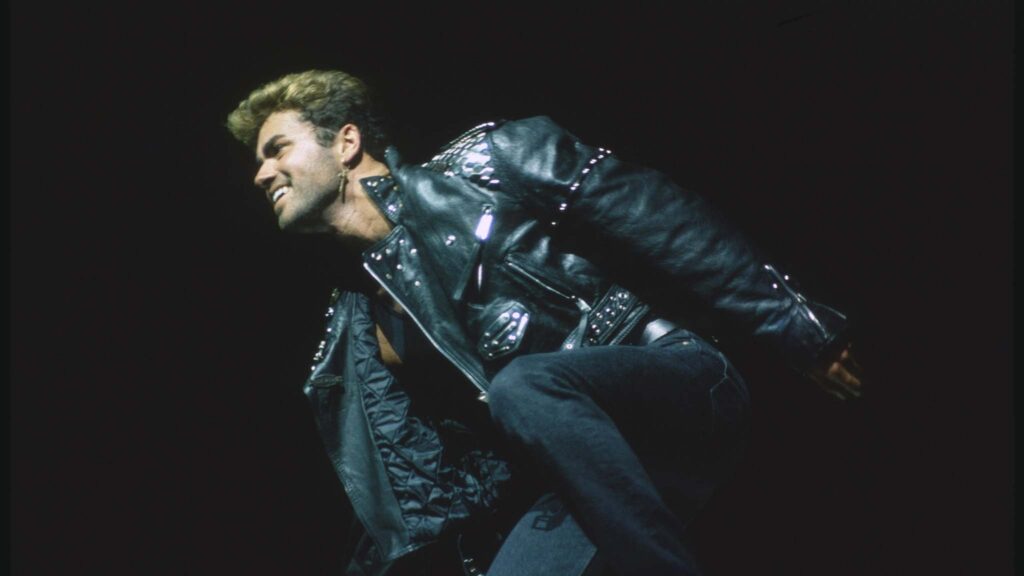
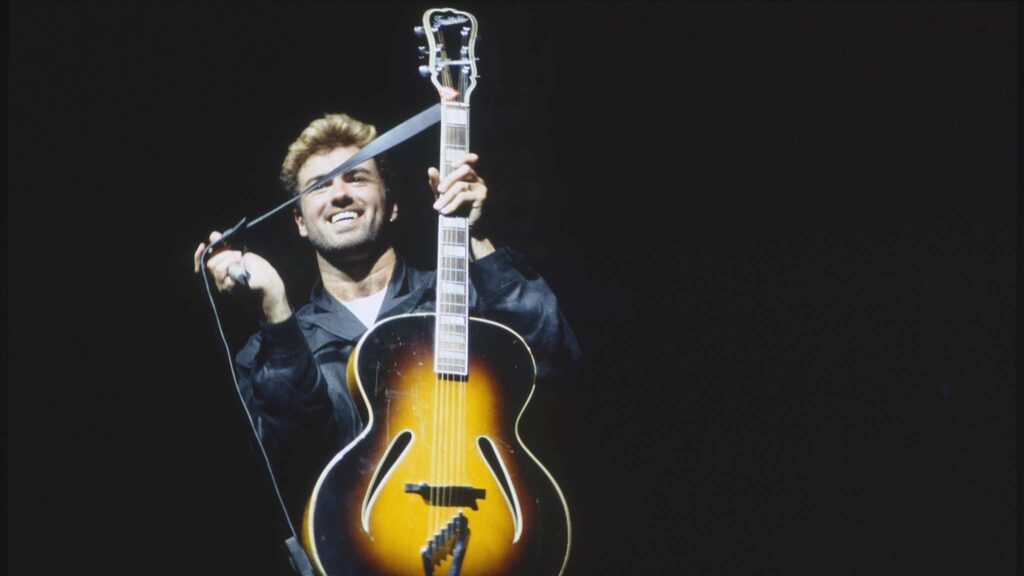
Review: Last Christmas, Wham! gave us their hearts. This Christmas, those same hearts will break marking the 10-year anniversary of the death of George Michael, one of the greatest singer-songwriters the UK has ever produced. As a solo artist, his debut album, Faith, released a little over a year after Wham!’s farewell concert at Wembley Stadium, became one of the biggest-selling LPs of 1987, emblazoned with that striking front cover image by photographer Russell Young of the singer swathed in a custom, black leather, biker jacket. Faith earned numerous awards including the Grammy for Album Of The Year and the Brit Award for Best British Male Artist. Michael was 24 – the same age as Amy Winehouse when she surfed the wave of success for Back To Black.
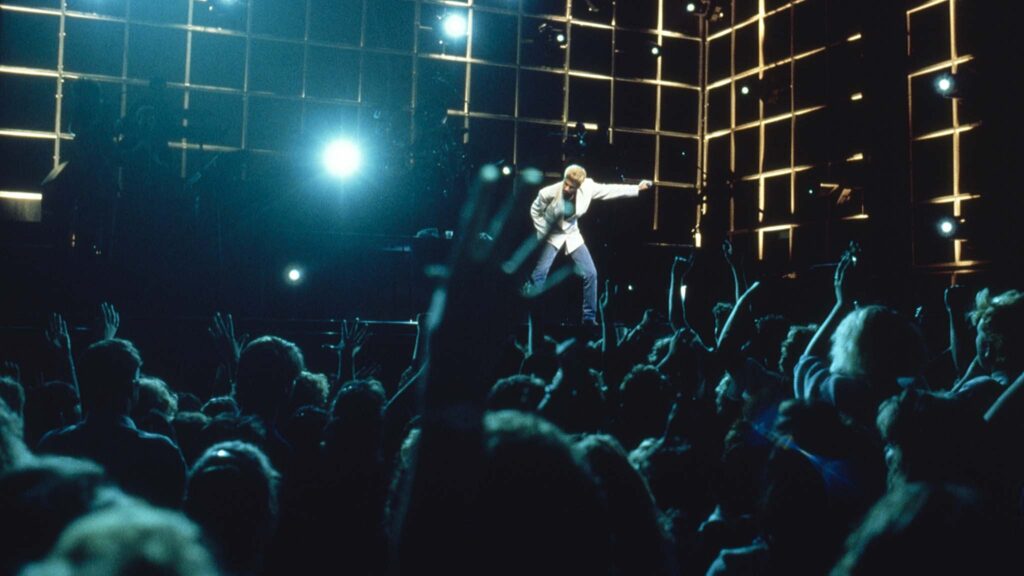
His magnetic stage presence and heavenly vocals are immortalised in George Michael: The Faith Tour. Directed by David Austin and Andrew Morahan, this lovingly restored concert film captures the singer at the height of his powers using footage from 14 cameras operated over two consecutive nights in May 1988 at the Palais Omnisports de Paris-Bercy in Paris during the European leg of a gruelling world tour.
The show opens with I Want Your Sex (Part I) and judging by the high-decibel reception from the audience in Paris, they are delighted by Michael’s gyrations in jeans, a vest and jacket before he glides through a set list that boasts the hits Father Figure, I’m Your Man, Everything She Wants, A Different Corner, Faith, Monkey, One More Try, I Knew You Were Waiting (For Me) and Careless Whisper.
Ballads sporadically centre him in a spotlight but, for the most part, he prowls back and forth along the full length of the stage, delivering flawless vocals and never sounding out of breath. That happy marriage of athleticism and vocal agility puts many modern pop stars to shame. The concert is preceded by Mary McCartney’s short film, Finding Faith, which juxtaposes photographer Herb Ritts’ striking images of the singer and behind-the-scenes footage from the Faith music video with audio from an interview with Michael. Without this nimbly edited insight into the singer’s brilliant mind, his non-singing voice would be largely silent.
There is surprisingly little banter between Michael and the concert crowd, aside from a cheerful “Bonsoir!” and occasional name checks of songs. The only time he does fully engage is to tease the throng with three clues about which track he will perform next (as soon as a crew member hands him a guitar, the guessing game is over). That fascinating contradiction of the introvert showman, loudly asking his French fans “Voulez-vous coucher avec moi, ce soir?” during a soaring cover version of Lady Marmalade, was part of Michael’s undeniable charm. In 1988 on the tour, a superstar was born.
Find George Michael: The Faith Tour in the cinemas
Drama
I Play Rocky (12A)
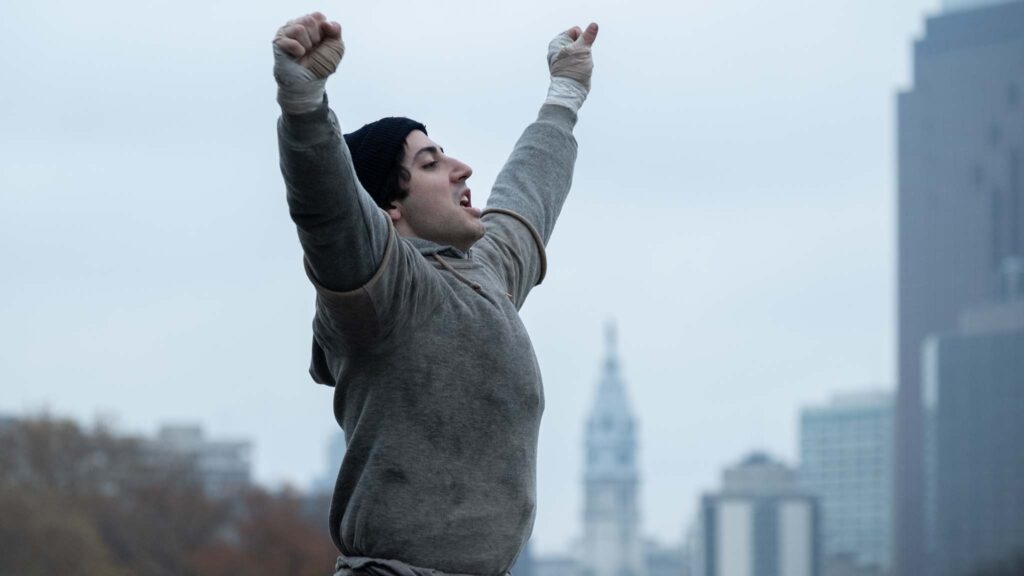
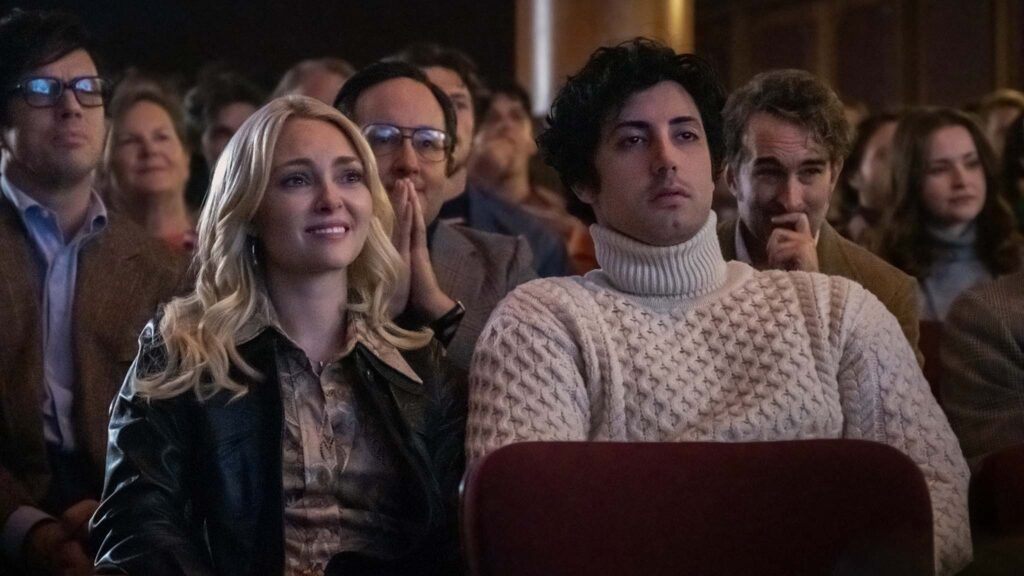
Review: In 1977, art imitated life when scrappy, underdog boxing drama Rocky punched above its weight at the Academy Awards, winning Best Picture, Best Director and Best Editing. Thirty-year-old Sylvester Stallone became the first person since Orson Welles to garner nominations for writing and acting for the same film. Green Book director Peter Farrelly bobs and weaves through a heartwarming recreation of the real-life struggles behind the lens of Rocky, emboldened by a tour-de-force lead performance from Anthony Ippolito as struggling actor Sylvester Stallone, who is encouraged to write a script for himself by his wife Sasha (AnnaSophia Robb).
“If you don’t believe in yourself, who you gonna get to believe in you?” she challenges her spouse. He barely makes enough money to pay rent in Los Angeles with Sasha and feed their dog Butkus. This dispiriting day-to-day fight for survival inspires his screenplay about a down-on-his luck boxer called Rocky Balboa, who is gifted an unlikely shot at glory against heavyweight world champion Apollo Creed.
Sylvester sneaks his script into a pile earmarked for film producers Irwin Winkler (PJ Byrne) and Robert Chartoff (Tony Kebbell). They pitch the story to cynical studio executive Sandy Maddox (Tracy Letts), who doesn’t like boxing films and won’t consider an unknown in the title role. “This is me. It’s my story. So I play Rocky,” Sylvester bullishly informs Irwin and Robert. He eventually wins that round. With a strict million-dollar budget and John G Avildsen (Jay Duplass) in the director’s chair, Rocky goes into production and Stallone pushes his body to breaking point to fulfil the terms of his contract and disprove his naysaying father (Matt Dillon), who believes, “Acting’s fake, money’s real”.
I Play Rocky is a life-affirming ode to holding fast to your dreams when the omens suggest failure is the likeliest outcome. Ippolito’s electrifying embodiment of Stallone mimics his physique, vocal tone and speech impediment without ever feeling like a slavish impersonation. It’s a career-making turn that captures some of the lightning in a bottle that Stallone must have experienced 50 years ago when the first audiences roared their approval for Rocky.
Robb’s supportive spouse is armed with inspirational one-liners (“I’d rather be an optimist and be wrong than be a pessimist and be right”) but the character feels undernourished outside that plot-driven purpose. Stephan James arrives late to the brawl as actor Carl Weathers, who plays Apollo Creed. He initially dismisses Sylvester’s chances of embodying Rocky (“Are you kidding me? This guy couldn’t win a pillow fight!”) mirroring on-screen characters who reject Rocky as a bona fide contender. On and off camera, Sylvester fights to cling on to his passion project. He goes the distance, with a few bumps and scrapes, and so does Farrelly’s affectionate biography.
Find I Play Rocky in the cinemas
Comedy
Wild Horse Nine (15)
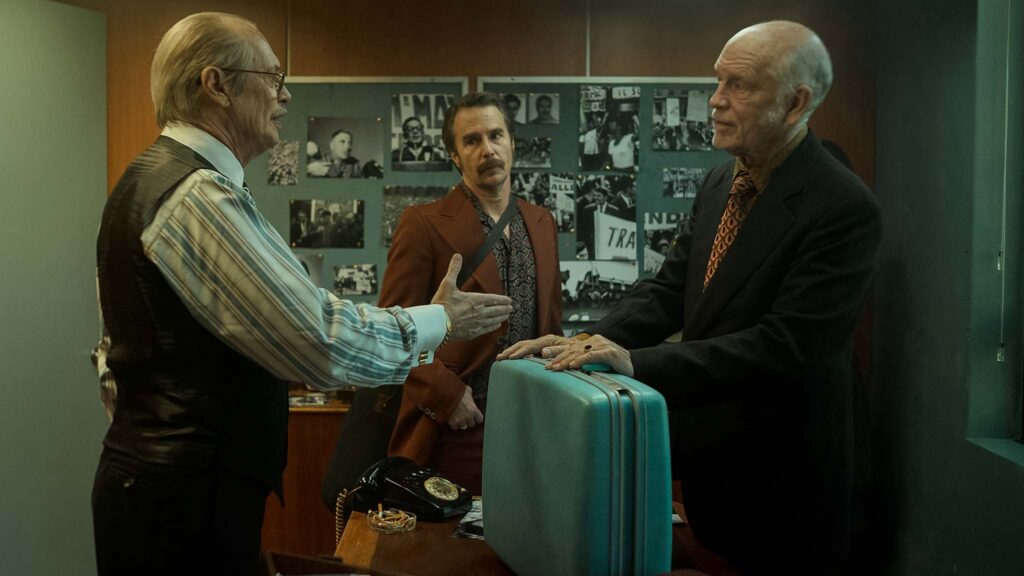
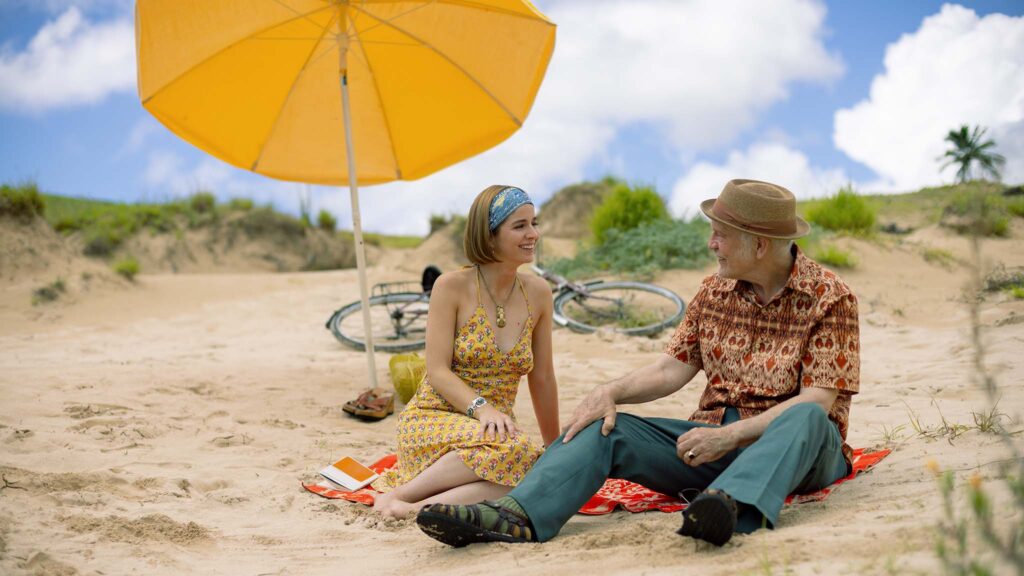
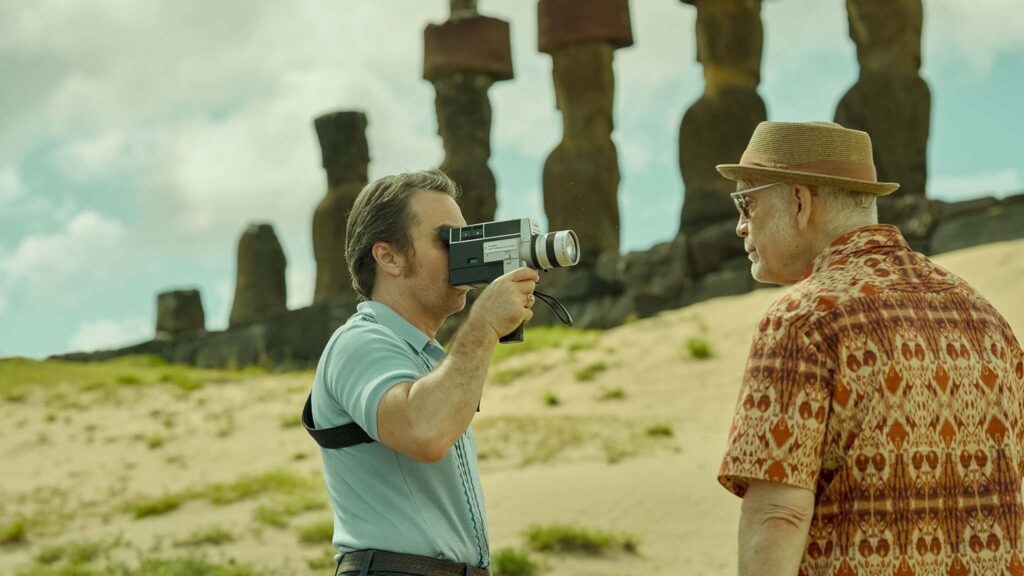
Review: The sweet smell of success follows writer-director Martin McDonagh like the intoxicating base notes of an expensive cologne. All his previous feature films – In Bruges, Seven Psychopaths, Three Billboards Outside Ebbing, Missouri and The Banshees Of Inisherin – have won or been nominated for Academy Awards, Baftas or Golden Globes. This darkly comedic thriller, set during a pivotal moment in South American history, will extend that impressive statistic and offers a compelling argument for lavishing John Malkovich with trophies for his showy portrayal of a terminally ill and paranoid CIA asset who can no longer muster the energy to apply a filter between his brain and mouth.
Chris Carlisle (Malkovich) and his long-term partner in covert crimes, Lee Chesterfield (Sam Rockwell), complete an assignment to destabilise the democratic rule of president Salvador Allende in 1973 Chile, which will light a fuse on a bloody coup d’etat led by General Augusto Pinochet. As the two agents leave Santiago, bound for Easter Island, they encounter students Monica (Mariana di Girolamo) and Alicia (Ailin Salas) at the departure gate.
Relocating to the remote volcanic territory made famous by oversized stone heads, Chris reads two handwritten notes in his pocket: “Remember that you’re dying” and “Don’t trust Lee”. While Chris was battling cancer head-on, dementia has been stalking him by stealth, and ghosts of the past are returning to haunt him to prevent Chris from spilling secrets connected to a news headline that gobsmacked the world. As strange events unfold on Easter Island, CIA boss MJ (Steve Buscemi) stages his own intervention.
Wild Horse Nine feels like a melancholic and wistful older brother of McDonagh’s debut film, In Bruges, which transplanted two gunmen for hire to the canals of Belgium in the aftermath of a bungled hit. This assured and frequently uproarious feature relocates fast-paced fraternal banter and explosions of dramatically necessary violence to a troubled paradise in the Pacific Ocean.
Malkovich and Rockwell are an electrifying double act, the latter in particularly fine form playing an exasperated straight man to his screen partner’s attention-grabbing outbursts. The script arms both actors with verbal grenades to toss gleefully into emotionally charged pauses and silences that bookmark a haphazard realisation of a dying wish. Buscemi has a blast as a world-weary spy boss who resorts to chemical intoxication to get through the day (“Life’s sad. Everything’s sad. That’s why I take so much smack!”) He is the gasoline that McDonagh sloshes over an angsty final act and intentionally ignites the fumes. Trotting over rocky narrative terrain with Chris and Lee demands little effort on our part because the London-born film-maker is firmly in control at the reins.
Find Wild Horse Nine in the cinemas