

Comedy
Digger (15)
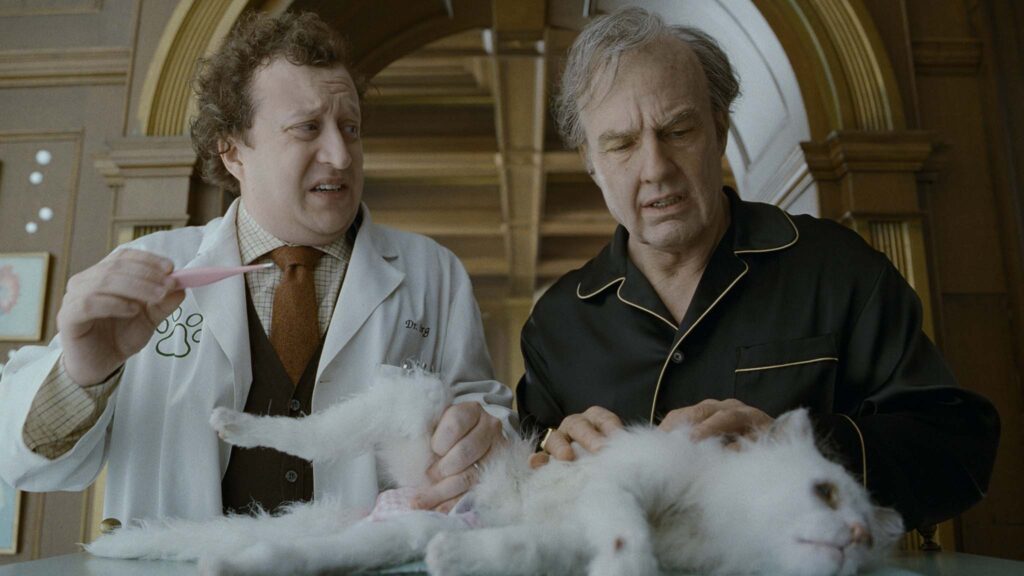
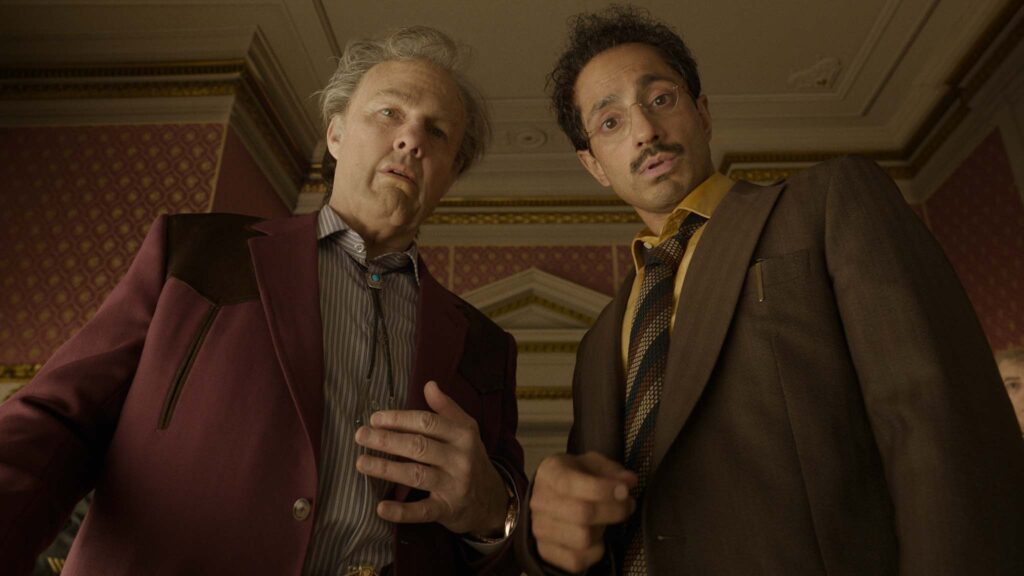

Review: The most treasured possession of self-aggrandising business mogul Digger Rockwell, played with scenery-chewing gusto by a prosthetics-encased Tom Cruise, is a shovel handed down by generations of deluded Rockwell men. If we’re calling a spade a spade then Alejandro G Inarritu’s visually dazzling satire is a bloated and bewildering mess that repeatedly swings big and hits itself squarely in the face with that shovel.
A screenplay credited to the director and co-writers Alexander Dinelaris, Nicolas Giacobone and Sabina Berman inflicts its first disorienting blow around the 30-minute mark. Once the film’s true intentions crystallise, addled brains might deduce Digger is the unholy love child of Inarritu, Wes Anderson and Stanley Kubrick. Proceed with extreme caution. Grey-haired oil tycoon Digger Rockwell (Cruise) is one of the richest men in the world, who has world leaders on speed dial.
Following an avoidable disaster at his Greenland drilling operation, which produces around six million barrels of oil a day, Digger faces the greatest environmental catastrophe in mankind’s history. An explosion at the rig causes an ice shelf, more than four times the size of Washington DC, to crash into the sea, triggering a tsunami. Models predict the breakaway ice will crash into Scandinavia resulting in hundreds of thousands of casualties.
“Digger here got us into this mess and Digger’s gonna dig us out!” barks enraged US President Compson (John Goodman) during an emergency meeting of top staff, military chiefs and experts including the Vice President (Michael Stuhlbarg) and scientific adviser Ganesh (Riz Ahmed). The assembled throng cannot agree a course of action, which exasperates Compson, who cannot believe the most powerful nation in the world is “powerless against a giant snow cone”. As nations bay for Digger’s blood, the titan meets outrage with chest-puffing bravado and bombast, weathering a media storm while he contends with tirades from his half-sister Emma (Sandra Huller) and the faltering health of his beloved cat Maggie.
I didn’t dig Digger, and I really tried. Technical credits are jaw-dropping, from the wildly imaginative production design and seamlessly melded practical and digital effects to three times Oscar winner Emmanuel Lubezki’s impeccable cinematography. Tear through that exquisite wrapping paper though and you’ll find a baffling meditation on corporate greed, political brinkmanship and artistic expression. With great power comes absolute deniability.
Cruise relishes the opportunity to play a man who made his vast fortune by penetrating “every sacred hole on our planet”. His character’s barely contained lunacy matches the escalating madness of Inarritu’s vision but Ahmed’s eye-catching supporting performance manages to cut through the noise. It’s a fascinating farrago, overstuffed with big ideas, all screaming shrilly for attention. By the end of the two hours, my head was spinning. No sense or nonsense? Both shoes, or rather cowboy boots, fit Digger snugly.
Find Digger in the cinemas
Thriller
Verity (15)

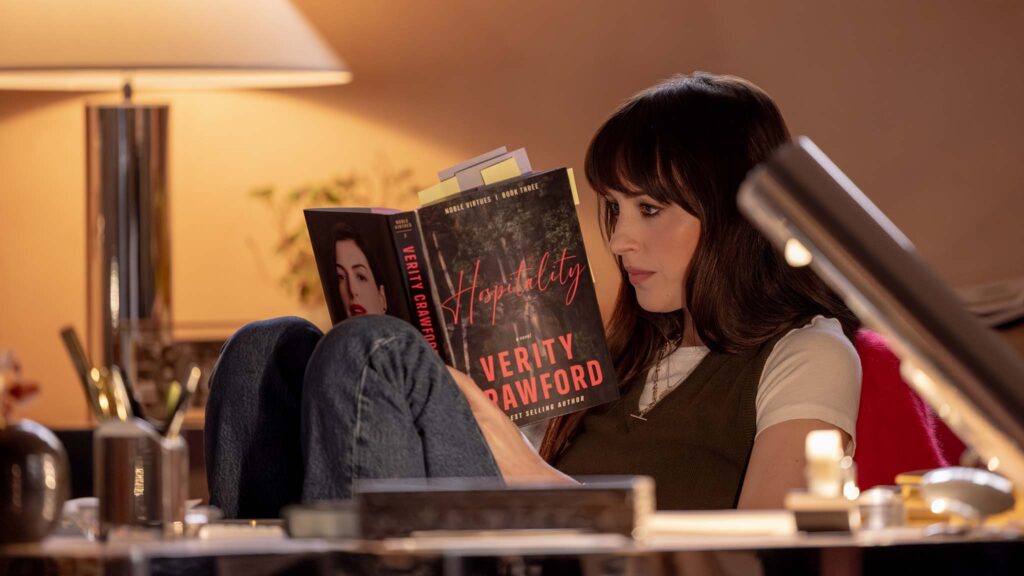

Review: Colleen Hoover’s 2018 psychological thriller Verity marked a significant departure from the angsty contemporary romances that are a cornerstone of the author’s brand and popular fodder for her book-to-screen adaptations (It Ends With Us, Reminders Of Him, Regretting You). Screenwriter Nick Antosca remains faithful to the source text for a glossy and formulaic mystery, which relies heavily on Oscar winner Anne Hathaway to toy with sympathies as the titular character, who writes best-selling novels from the perspective of her villains.
Following a disastrous book reading, largely unknown author Lowen Ashleigh (Dakota Johnson) calls her literary agent, Corey (Ismael Cruz Cordova), and learns she has been invited to a top-secret meeting at the swanky Manhattan office of Hatchette Book Group. Once Lowen has added her scrawl to a non-disclosure agreement, editor Amanda Thomas (KK Moggie) reveals that Verity Crawford (Hathaway), best-selling creator of the Noble Virtues series, is unable to complete the next three titles “due to extenuating circumstances”.
Verity and husband Jeremy (Josh Hartnett) have hand-selected Lowen to write the outstanding novels for a generous six-figure fee. After some gentle persuasion, Lowen agrees and moves into the Crawfords’ architecturally impressive home in Vermont where she discovers the true extent of Verity’s condition, managed by nurse Anna (Irina Dvorovenko). Lowen befriends Verity’s cherubic son Crew (Brady Wagner) and learns about a recent tragedy that led to the drowning of Crew’s sister, Harper (Sienna Kulovitz). Honouring her commitments, Lowen sifts through boxes of Verity’s research to piece together a framework for the next book. Meanwhile, she grows increasingly close to Jeremy, who confesses that he has only read his wife’s first book. “I don’t like being in her head,” he explains.
Verity feels like a throwback to a bygone era of pulpy erotic thrillers that pit women against each other for a man’s affections. Only here, one of the rivals is a phantom menace trapped in silence by outrageous circumstances. Thanks to the plot, Hathaway is immobilised and uncommunicative and her character’s influence requires copious flashbacks and imagined scenarios, visualised from Lowen’s point of view. This repeated to and fro between present and past hobbles dramatic momentum and director Michael Showalter has limited time to tease and deliver a telegraphed big reveal.
The Oscar winner sinks her lacquered nails into the film’s showiest role and has a hoot exposing the many facets of Verity’s dark personality. By contrast, Johnson’s ingenue is pure vanilla and doesn’t fully earn the emotional investment required for the final act to land with force. Hartnett nestles comfortably between co-stars. The final stretch asks timely questions about the malleability of truth. Unlike the duplicitous characters on screen, Showalter’s powers of emotional manipulation are meek and mild.
Find Verity in the cinemas
Thriller
The Weight (15)
Review: Guilt and despair can weigh heavily. In Padraic McKinley’s tense Depression-era crime drama, emotional baggage saps the energy and resolve of physically imposing brutes and only the most determined characters emerge unscathed from a gruelling trek through the untamed Oregon wilderness. The Weight puts underdogs on tight leashes, and tries to break their spirits with bruising punishment, then creates the perfect adverse conditions for a resourceful runt to bite the hand that beats it.
In 1933 Oregon, widower Samuel Murphy (Ethan Hawke) is the victim of cruel misfortune as he seeks to take care of his young daughter Penny (Avy Perry). Unknowingly, he assaults police officers and as swift and stinging punishment, Samuel is sent to a brutal work camp run by glowering warden Clancy (Russell Crowe), who demands submission from his charges. Defiance is met with intimidation, or worse. Penny is due to be adopted before Samuel’s year-long sentence is served so he is interested when the warden dangles the carrot of early release papers.
To reduce his sentence and reunite with his child, Samuel must smuggle gold on foot through deadly wilderness back to Clancy. President Roosevelt has just announced gold held in storage must be reclaimed for the Federal Reserve and Clancy intends to make a sizable withdrawal from a vault located 100 miles away in the woods before anyone realises the lustrous bricks are missing. Samuel joins three other prisoners, Olson (Lucas Lynggaard Tonnesen), Rankin (Austin Amelio) and Singh (Avi Nash), to complete the operation, with one of Clancy’s hired guns, Taggert (Alec Newman), accompanying the crew with firepower. An indigenous woman named Anna (Julia Jones) unexpectedly joins the cross-country odyssey and she bears witness to resentment and mistrust percolating between desperate men.
The Weight is an assured character study anchored firmly to Hawke’s nuanced and compelling portrayal of a down-on-his-luck father, who quietly observes the weaknesses of people who believe they have him in their vice-like control. His scintillating performance dominates every frame of McKinley’s feature film directorial debut and throws into sharp relief the lack of depth in some supporting players.
Crowe doesn’t break a sweat embodying his threatening taskmaster. Menace glints in his eyes while Jones serves limited narrative purpose beyond offering an obvious antidote to all that testosterone sloshing about on screen. Screenwriters Matthew Booi and Shelby Gaines skip between genres like a stone skittering across the glassy surface of a lake as they address incendiary racial politics of the era, choreograph action sequences and stoke interpersonal rivalries. McKinley shoulders the weight of responsibility for melding elements with a cool head.
Find The Weight in the cinemas